Why Small Dogs Resist Grooming and How to Spot Stress
At Portal Tambas, we specialize in small dog aggression and behavior, and we’ve seen it all—from the “Pomeranian Piranha” to the “Chihuahua Chainsaw.” But why do these tiny companions resist something as simple as a brush?
Most of the time, it comes down to a fear response. Because small dogs are low to the ground, a human hovering over them with a metal tool can feel incredibly threatening. If a previous grooming session involved accidental hair pulling or a painful tug on a mat, your dog has likely formed a negative association. They aren’t being “bad”; they are trying to protect themselves from perceived pain.
Understanding brushing basics for petite pooches starts with reading their body language. Small dogs often give subtle warnings before they resort to snapping. Watch for these signs of the “Grooming Threshold”:
- Trembling: A clear sign of high cortisol and anxiety.
- Lip Licking: This is a “displacement behavior” used to self-soothe.
- Whale Eye: When you see the whites of your dog’s eyes, they are feeling trapped and defensive.
- Panting: If it’s not hot and they haven’t just exercised, this is stress-induced.
- Turning the Head Away: This is a polite way of saying, “I’m not comfortable with this.”
If you ignore these signs and keep brushing, the dog may feel forced to escalate to growling or biting to make the “scary thing” stop.
Preparing the Environment to Calm Small Dog During Brushing
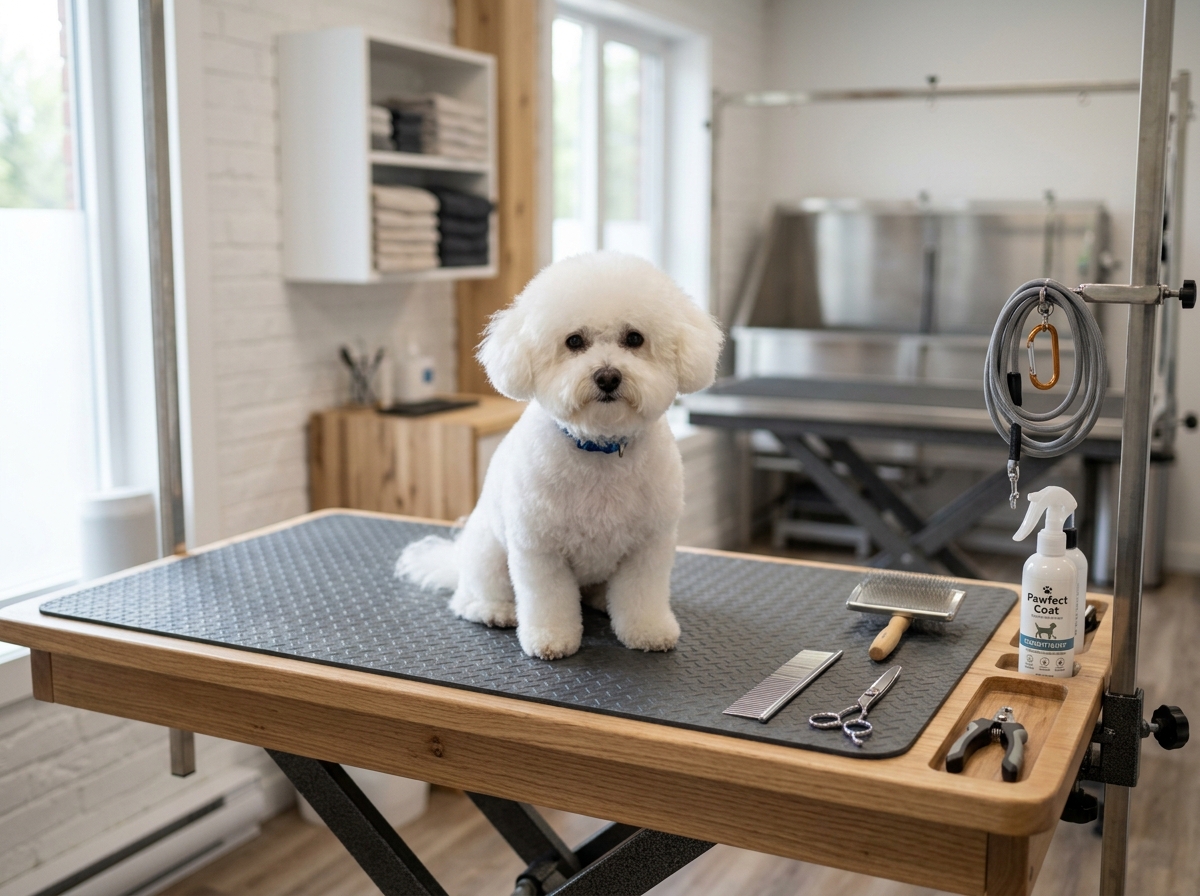
Creating a calm small dog during brushing experience starts long before the brush touches the fur. You need to set the stage for success.
Location Matters
Don’t chase your dog around the living room. This turns grooming into a terrifying game of tag. Instead, choose a consistent, elevated surface like a sturdy table or a countertop. Being higher up often makes small dogs feel more secure because they aren’t being “loomed over” from a great height. Always use a non-slip mat; sliding around on a slick surface adds unnecessary physical stress to their joints and mind.
Pre-Grooming Exercise
A tired dog is a well-behaved dog. We recommend a 15-to-20-minute vigorous play session or a long walk before you even bring out the tools. Burning off that nervous energy makes them less likely to wiggle and more likely to settle into a relaxed state. Knowing how to keep your small dogs coat tangle-free is much easier when your “client” is ready for a nap.
Sensory Aids
Small dogs have a powerful sense of smell. Using calming pheromone diffusers or a drop of dog-safe lavender oil on your hands can help lower their heart rate. Some owners find success with soft classical music or “white noise” to drown out the scary sounds of clippers or outside distractions.
Essential Tools and Rewards for Tiny Tangles
Using the wrong tool is a one-way ticket to a grooming disaster. Brushes designed for Golden Retrievers are often too heavy and abrasive for the thin skin of a Yorkie or a Maltese.
Choosing the Right Brush
- Slicker Brushes: Great for removing loose fur and debris, but ensure you get a “soft” version with coated tips so you don’t scratch the skin.
- Pin Brushes: Ideal for long-haired breeds like Chihuahuas or Havanese. Look for rounded ends to prevent “skin prick.”
- Metal Combs: The “truth-teller.” Use this after brushing to ensure you haven’t missed any deep tangles.
Check out our guide on the best grooming tools for small dog breeds to find the perfect match for your pup’s coat type.
The Power of the Lick Mat
Distraction is your best friend. Smear some xylitol-free peanut butter or plain Greek yogurt onto a silicone lick mat. While your dog is focused on the repetitive, self-soothing action of licking, you can work on those tricky areas. High-value treats — think tiny pieces of boiled chicken or freeze-dried liver — should be given frequently to build a “brushing = delicious” connection.
Tool Comparison Table
| Feature | Slicker Brush | Pin Brush | Bristle Brush |
|---|---|---|---|
| Best For | Removing loose hair/mats | Long, silky coats | Short, smooth coats |
| Small Dog Benefit | Reaches undercoat easily | Gentlest on fine hair | Distributes natural oils |
| Risk Factor | Can scratch skin if too firm | Can pull if hair is matted | Won’t remove deep tangles |
Step-by-Step Guide to Calm Small Dog During Brushing
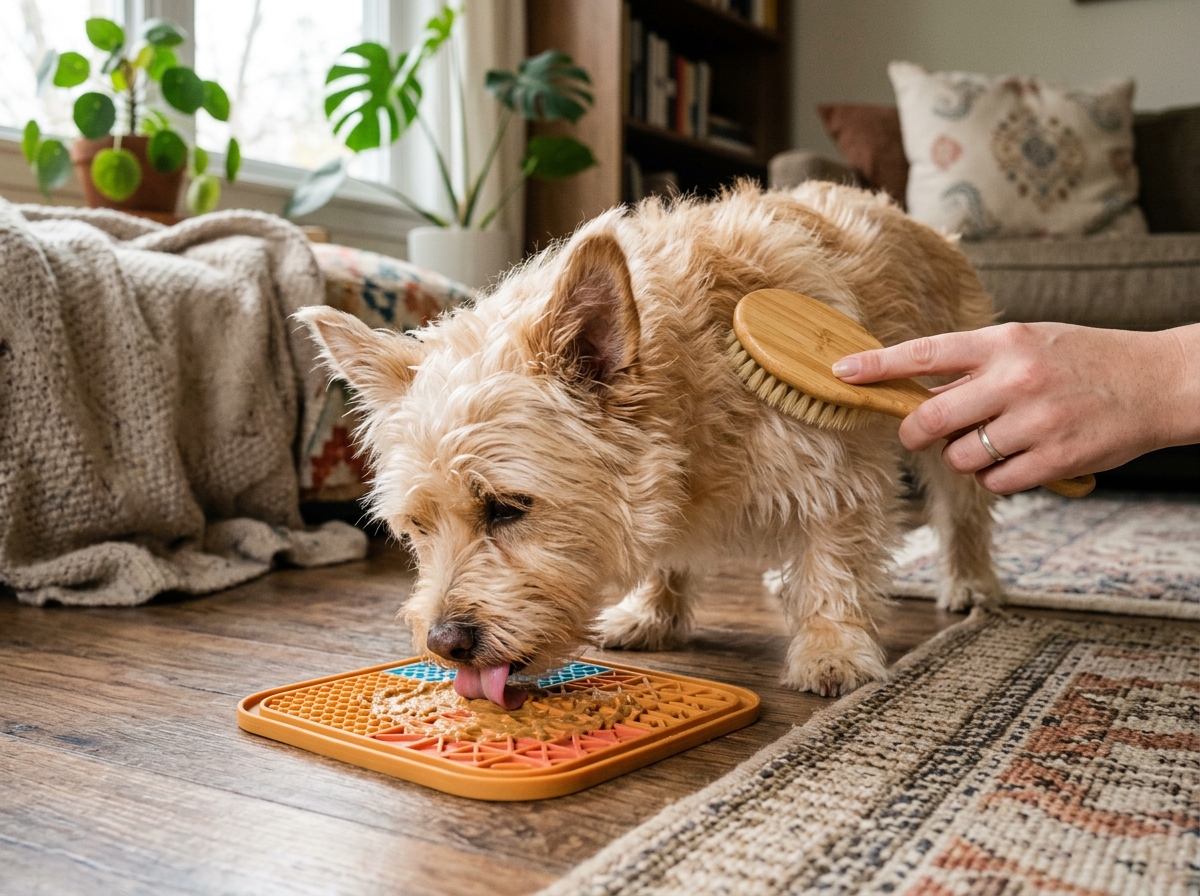
To truly calm small dog during brushing, we use a process called husbandry training. This is the same method zookeepers use to get lions to sit for blood draws—it’s all about cooperation, not coercion.
Phase 1: Touch Habituation and Tool Introduction
Don’t start by brushing. Start by just having the brush nearby.
- Scent Association: Place the brush on the floor and put a treat on top of it. Let your dog investigate.
- The “Back of the Brush” Trick: Rub the smooth back of the brush against your dog’s shoulder while feeding a treat. This simulates the sensation of grooming without the “pull” of the bristles.
- Gentle Handling: Practice touching your dog’s paws, ears, and tail every day without a brush. Reward them for staying still. This builds trust for when the tools eventually come out.
Phase 2: Using Rewards to Calm Small Dog During Brushing
Once your dog is comfortable with the tool’s presence, move to active grooming using effective brushing techniques for small dogs.
- The Five-Second Rule: Brush for five seconds, then stop and give a high-value treat.
- Low-Sensitivity First: Start at the shoulders or chest. These are “safe” zones. Avoid the face, paws, and “trousers” (back legs) until the end of the session.
- Frequent Breaks: If you see a stress signal (like a lip lick), stop immediately. Give your dog a “reset” break. We want them to feel they have a choice in the matter.
- Consistency: Follow the optimal grooming schedule for your small dog to ensure sessions stay short and manageable. Brushing for 3 minutes every day is much better than a 30-minute “battle” once a month.
Handling Mats and Aggression Without Fear

Mats are the primary cause of grooming pain. When a brush hits a mat, it pulls the skin tight, which feels like a sharp pinch.
How to Remove Mats Humanely
- Support the Skin: Always hold the base of the hair (near the skin) with your fingers before brushing the mat. This ensures the pull happens against your fingers, not the dog’s sensitive skin.
- Use Detangler: Saturate the knot with a dog-safe detangling spray or a bit of cornstarch to help the hairs slide apart.
- Pick, Don’t Pull: Use the end of a metal comb to gently pick at the mat from the outside in. If it’s too tight, don’t be a hero—use safety shears to carefully snip it out.
How to Calm Small Dog During Brushing if They Snap?
If your dog snaps or bites, do not punish them. Yelling or “alpha rolling” the dog will only confirm their fear that grooming is a dangerous, violent event.
- Redirect: Calmly stop the session. Use a puzzle toy to redirect their focus.
- Muzzle Training: For dogs that bite, a basket muzzle is a wonderful tool. It’s not a punishment; it’s a safety net that allows you to work on desensitization without the fear of injury.
- Professional Intervention: If the aggression is severe, it’s time to consult a professional. Sometimes, a “clean slate” with an experienced groomer who uses low-stress handling can break the cycle of fear at home.
Frequently Asked Questions about Brushing Small Dogs
How long should a brushing session last for a nervous dog?
For a highly anxious dog, aim for 2 to 5 minutes. It is much better to have a successful 2-minute session where the dog stays calm than a 15-minute session that ends in a struggle. You can do multiple mini-sessions throughout the day.
What are the best calming aids for small dog grooming?
Lick mats with frozen peanut butter are the gold standard. Beyond food, pheromone sprays (like Adaptil) and pressure wraps (like a Thundershirt) can provide a “hug” sensation that lowers anxiety. Always consult your vet before using herbal chews or supplements.
How often should I brush my small dog to prevent mats?
It depends on the coat! Long-haired breeds like Yorkies or Shih Tzus should be brushed daily or at least every other day. Short-haired breeds can usually go a week between sessions. The goal is to catch tangles before they turn into painful mats.
Conclusion
Teaching a calm small dog during brushing isn’t about “showing them who’s boss”—it’s about building a partnership based on trust and rewards. By using the right tools, keeping sessions short, and respecting your dog’s stress signals, you can turn a dreaded chore into a bonding ritual.
Every small dog is an individual. What works for a feisty Maltese might not work for a shy Toy Poodle. Patience and consistency are your most valuable tools. If you find yourself struggling with persistent aggression or fear, don’t hesitate to reach out. At Portal Tambas, we provide expert advice on managing small dog behavior to help you and your petite pooch live a happier, bite-free life.