Why How Stop Yorkie Resource Guarding Is a Problem You Can’t Ignore
If you want to how stop yorkie resource guarding, here’s what works:
- Trade up – swap the guarded item for a higher-value treat or toy
- Desensitize gradually – approach from a distance, toss treats, slowly get closer over many sessions
- Teach “Drop It” and “Leave It” commands using positive reinforcement
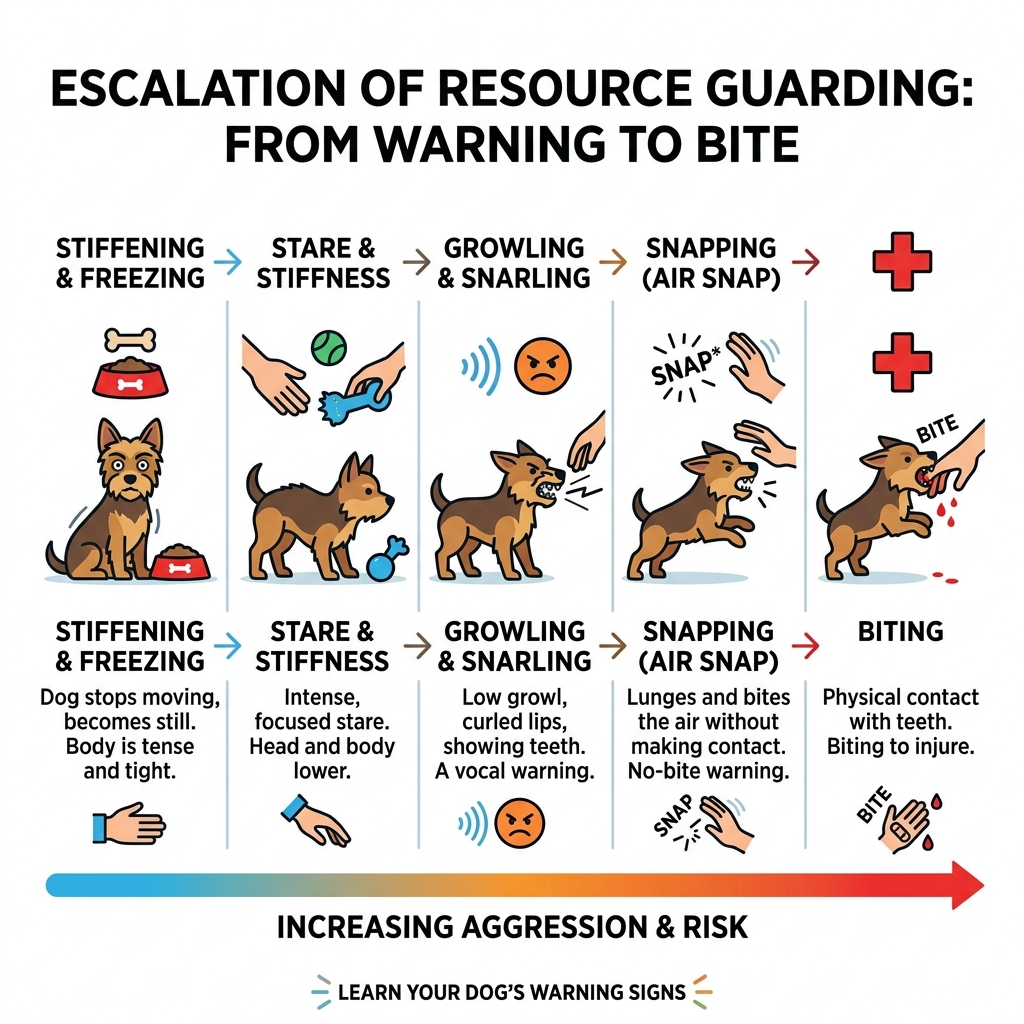
- Never punish growling – it removes warning signals and increases bite risk
- Remove access to high-value items until training is solid
- Seek a vet check first if aggression appeared suddenly – pain is a common hidden cause
Have you ever reached for your Yorkie’s food bowl or favorite toy, only to be met with a hard stare, a stiff body, and a low growl? That small dog just gave you a big warning.
Resource guarding is when a dog protects something they value – food, toys, a bed, or even you – from anyone who gets too close. It’s rooted in survival instinct. Thousands of years ago, dogs didn’t eat on a schedule. Protecting food meant staying alive.
The problem is that in a modern home, that instinct becomes a safety issue.
And Yorkies? They can be intense about it. Despite weighing around 2 kg, they often overcompensate for their small size with outsized reactions. One certified trainer famously described her own Yorkie as a “tiny terror” – a dog that growled and nipped when picked up from his bed, stumping two previous trainers.
You’re not alone if you’re dealing with this. Studies show that roughly 15.3% of dogs exhibit resource guarding behavior – and that’s just in shelter populations. In homes where the behavior was accidentally reinforced over time, the number is likely much higher.
The good news: this behavior is treatable. With the right approach, patience, and consistency, most Yorkies can learn that sharing isn’t a threat.
Understanding the “Tiny Terror”: Why Yorkies Guard Resources

To effectively learn how stop yorkie resource guarding, we first have to understand the “why” behind the growl. Yorkshire Terriers are tiny but mighty, usually weighing in at a delicate 2 kg. Because they are so small, the world can feel like a very big, threatening place.
Evolutionary Instinct and Breed Factors
Resource guarding isn’t a sign that your dog is “mean” or trying to dominate the household. In fact, modern behaviorists have largely moved away from the idea of “dominance.” Instead, guarding is a natural survival instinct inherited from wild ancestors. For a dog in the wild, losing a meal could mean starvation.
Yorkies, specifically, were bred to be tenacious ratters and alert dogs. They were often favored by aristocrats to guard laps and sound the alarm if a stranger approached. This history makes them naturally more prone to being “vocal” about their boundaries. When you combine that history with their small stature, you get a dog that feels they must shout (or growl) to be heard.
The 15.3% Statistic and Prevalence
According to Resource Guarding | Your Dog’s Friend, a study of over 1,000 dogs found a 15.3% prevalence of resource guarding. While this affects all breeds, small dogs often develop these habits because humans tend to ignore their early warning signs. We might laugh at a tiny puppy growling over a sock, whereas we would be terrified if a 40 kg Rottweiler did the same. By the time the Yorkie is an adult, the behavior is deeply ingrained because it “worked” to keep people away.
Medical Triggers: Pain and Vulnerability
Before we dive into training, we must address the physical side. Yorkies are prone to specific health issues like tracheal collapse and arthritis. If your Yorkie is in pain, they will naturally be more protective of their space. A dog with sore joints will guard their bed because they fear being touched or moved will hurt.
Sudden onset aggression should always prompt a trip to the vet. For more on how health impacts temperament, check out our guide on addressing-small-dog-behavior-issues.
Effective Strategies on How Stop Yorkie Resource Guarding
Once we’ve ruled out medical issues, we move into management. Management isn’t “fixing” the problem, but it is keeping everyone safe while we work on the training.
Environmental Control
The easiest way to stop a Yorkie from guarding is to make sure there is nothing to guard—at least temporarily.
- Separate Feeding: Feed your Yorkie in a crate or behind a baby gate. This removes the “scarcity mindset” and lets them eat in peace.
- Remove High-Value Triggers: If your Yorkie guards specific “contraband” like socks or expensive chews, keep those items out of reach.
- Identify the Threshold: Observe at what distance your dog starts to stiffen. Is it five feet? Two feet? Knowing this “red zone” is crucial for the training steps below.
According to How to stop your dog resource guarding food and toys | Dogs Trust, management is the foundation of any behavior plan. If you can prevent the dog from practicing the bad behavior, you’re halfway to success. For more specialized tips, see our article on managing-and-correcting-aggressive-behavior-in-small-dogs.
### How stop yorkie resource guarding through desensitization
Desensitization is the process of changing your dog’s emotional response to your approach. We want the Yorkie to think, “Yay! My human is coming!” instead of “Oh no, they’re going to take my stuff!”
- The “Party Time!” Phrase: Choose a happy, high-pitched phrase. When your dog has a low-value item, stand outside their threshold, say “Party Time!” and toss a piece of chicken or cheese. Then, walk away.
- Gradual Approach: Over several days, if the dog remains relaxed, move one step closer before tossing the treat.
- Counter-Conditioning: We are pairing the “threat” (you approaching) with a “win” (tasty food).
- Threshold Management: If your Yorkie growls, you’ve moved too fast. Back up and work at a further distance.
We go deeper into these techniques in our post on leveraging-positive-reinforcement-for-training-tiny-canines.
### How stop yorkie resource guarding with the “Trade-Up” game
The “Trade-Up” is the gold standard for how stop yorkie resource guarding. The goal is to teach your Yorkie that giving something up results in getting something even better.
- The Rule of Equal or Greater Value: If your Yorkie has a tennis ball, don’t just take it. Offer a piece of freeze-dried liver.
- The “Give” Command: Present the treat. When the dog drops the toy to take the treat, say “Give” or “Thank you.”
- Return the Item: Whenever possible (and safe), give the original item back after they eat the treat. This builds immense trust. They learn that “Give” doesn’t mean “Goodbye forever.”
Practicing this with puppies is the best form of prevention. You can find a step-by-step on basic commands at mastering-basic-commands-with-your-tiny-pup.
Essential Commands: Drop It and Leave It
Training these two commands can literally be a lifesaver, especially if your Yorkie finds something dangerous on a walk.
| Command | Goal | When to Use |
|---|---|---|
| Drop It | Release an item already in the mouth. | When they have your shoe or a chicken bone. |
| Leave It | Ignore an item before they pick it up. | When they are eyeing a dropped grape or a piece of trash. |
Training “Drop It”
Start with a low-value toy. While playing fetch, hold a treat to their nose. As they drop the toy, use a marker word like “Yes!” and give the treat. Repeat this until they drop the toy just by seeing the treat, then add the verbal cue.
Training “Leave It”
Place a treat under your foot. When the dog stops sniffing or pawing at your foot, click or say “Yes!” and give them a different treat from your hand. They learn that ignoring the “forbidden” item leads to a reward.
For more on turning a “tiny terror” into a “good boy,” check out from-tiny-terror-to-good-boy-training-tips-for-aggressive-small-dogs.
Common Mistakes That Escalate Aggression
When owners try to how stop yorkie resource guarding, they often accidentally make it worse by following outdated advice.
- Punishing the Growl: This is the most dangerous mistake. A growl is a warning. If you punish the growl, the dog will stop growling—but they will still feel threatened. Eventually, they will skip the warning and go straight to biting.
- “Showing Them Who’s Boss”: Sticking your hand in their food bowl or taking toys away just to “prove” you can actually creates resource guarding. It teaches the dog that you are a thief who can’t be trusted.
- Forceful Removal: Unless it’s a life-threatening emergency, never pry a Yorkie’s jaws open. This creates a massive amount of anxiety and will lead to more intense guarding in the future.
- Using Sonic Devices or Collars: These tools increase fear and anxiety, which are the root causes of guarding.
For a full list of what not to do, visit our category/training-tips section.
When to Seek Professional Help
While many cases of guarding can be handled at home, some require an expert eye. You should seek help from a certified trainer or veterinary behaviorist if:
- Your Yorkie has a history of biting and breaking skin.
- There are young children in the home who cannot respect boundaries.
- The guarding behavior is escalating despite your training.
- Your dog is guarding “random” spaces like the middle of the floor or doorways.
Signs that require professional intervention:
- Lunging from a distance.
- Biting without any previous warning signs (stiffening/growling).
- Guarding multiple items or people simultaneously.
- Intense “possessive anxiety” where the dog cannot settle if an item is present.
In severe cases, a vet may recommend medication to lower the dog’s baseline anxiety, making training more effective. Always use a harness instead of a collar for training to avoid putting pressure on a Yorkie’s sensitive throat.
Frequently Asked Questions about Yorkie Resource Guarding
Why does my Yorkie growl when I approach their bed?
This is often space guarding. The bed is their “safe zone.” If they have been startled or picked up abruptly in the past, they may growl to maintain their personal bubble. Use the “Party Time!” desensitization method to change their association with your approach.
Can resource guarding in Yorkies be cured or just managed?
In most cases, it can be significantly improved or resolved through counter-conditioning. However, for some dogs, it is a lifelong tendency that requires ongoing management. Think of it like a “pre-existing condition”—you can keep it under control with the right lifestyle, but you should always be mindful of it.
Is resource guarding different in Yorkies compared to large breeds?
The behavior is the same, but the risk and perception are different. Yorkies are more likely to guard because they feel physically vulnerable. Additionally, owners often let guarding slide in small dogs longer than they would with a large breed, which can make the behavior more ingrained.
Conclusion
At Portal Tambas, we know that living with a “tiny terror” can be stressful, but it doesn’t have to be that way. Learning how stop yorkie resource guarding is about building a relationship based on trust rather than fear.
By using positive reinforcement, trading up for better rewards, and respecting your Yorkie’s boundaries, you can transform your possessive pup into a confident companion. Remember: consistency is key, and patience is your best tool.
For more expert advice on navigating the unique world of small dog behavior, explore our expert training tips. You’ve got this, and we’re here to help every step of the way!