Is Your Small Dog Guarding Their Stuff? Here’s What to Do
Prevent small dog resource guarding by starting early, staying consistent, and using positive reinforcement — not force.
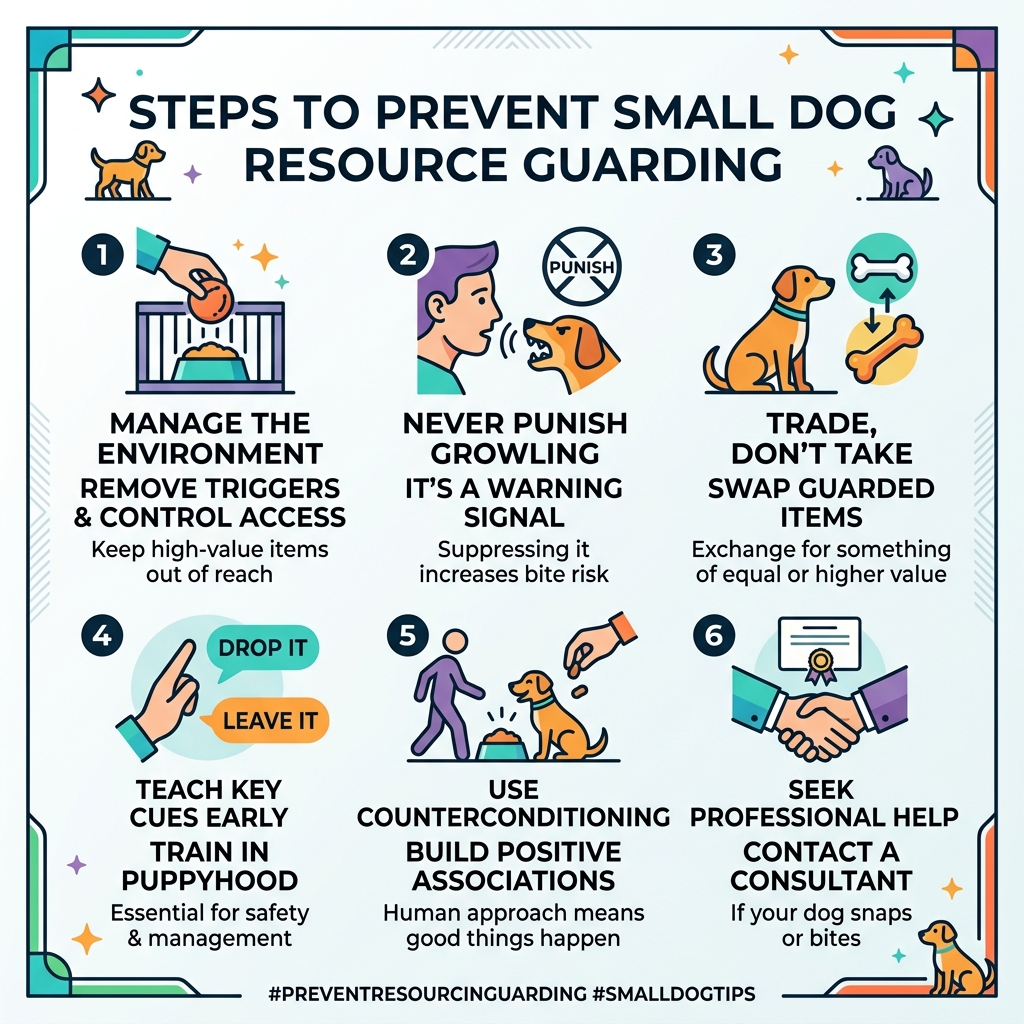
Here’s a quick overview of what works:
- Manage the environment — Remove high-value items that trigger guarding. Control access to food, toys, and spaces.
- Never punish growling — It removes your dog’s warning signal and makes biting more likely.
- Trade, don’t take — Always swap a guarded item for something of equal or higher value.
- Teach key cues early — “Drop it” and “leave it” are essential. Start in puppyhood.
- Use counterconditioning — Teach your dog that a human approaching their resources means good things happen.
- Seek professional help — If your dog has snapped or bitten, contact a certified behavior consultant.
Picture this: your small dog has a chew toy, you reach toward them, and suddenly there’s a low growl. Maybe even a snap. It’s alarming — and confusing, especially from a dog that weighs less than 15 pounds.
But here’s the thing. Resource guarding is not a small dog quirk. It’s a deeply rooted survival instinct found in dogs of all sizes. In the wild, holding onto food and valued items meant staying alive. That instinct didn’t disappear when dogs became our pets.
What is different with small dogs is how owners often respond. Small dogs are more likely to be picked up, coddled, or let off the hook when they growl. Over time, that can quietly turn a normal instinct into a real safety problem.
The good news? This behavior is highly preventable — and even when it’s already developed, it’s very treatable with the right approach.
Understanding Why Small Dogs Guard Resources
To effectively prevent small dog resource guarding, we first need to understand the “why” behind the growl. At its core, resource guarding is possessive aggression. It is the propensity of a dog to maintain possession of something they find valuable-be it a food bowl, a specific toy, a cozy spot on the sofa, or even a person.
Genetic Predisposition and Survival
While any dog can guard, some individuals have a stronger genetic predisposition toward it. In a litter of puppies, competition for milk or space can spark early guarding tendencies. For rescue dogs, a history of scarcity-not knowing where the next meal is coming from-can cement this behavior as a necessary survival tactic.
The “Small Dog Syndrome” and Owner Indulgence
We often see a pattern referred to as “Small Dog Syndrome,” which isn’t a medical diagnosis but a set of learned behaviors. Because small dogs are tiny and “cute,” owners are more likely to indulge them. We might let them claim the “prime real estate” on the couch or allow them to be pushy for attention. When a 100-pound Rottweiler growls, people take it seriously. When a 6-pound Yorkie growls, some people laugh or find it “feisty.” This indulgence teaches the small dog that they have “power” over their environment.
Learned Insecurity
Interestingly, many small dogs guard because they are actually insecure. If a dog is constantly picked up whenever they feel threatened, they never learn how to cope with the world on their own four feet. This creates a “learned insecurity” where the dog feels they must aggressively defend what they have because they lack the confidence to handle social pressure. You can read more about the root causes in our article on the big truth about small dog aggression.
Resource Value: It’s in the Eye of the Beholder
A resource doesn’t have to be “expensive” to be guarded. To your dog, a stolen dirty sock might be a “High-Value Item” equivalent to the One Ring from Lord of the Rings. The more we chase them to get the sock back, the more value that item gains in their mind. If you’d like a broader overview of the behavior itself, the American Kennel Club’s guide to resource guarding in dogs offers a helpful external reference.

Effective Strategies to Prevent Small Dog Resource Guarding
Prevention is always easier than a “cure.” The goal is to set up your home so your dog never feels the need to guard in the first place. This involves a mix of environmental control and clear boundaries.
Management Tools and Environmental Control
If your dog guards the sofa, they shouldn’t be on the sofa—at least for now. Management is about preventing the dog from “practicing” the bad behavior.
- Baby Gates and Exercise Pens: Use these to create “safe zones” where your dog can eat or enjoy a chew toy without feeling crowded.
- Tethering: Keeping your dog on a leash near you (tethered to a heavy piece of furniture or your waist) allows you to supervise them closely and prevent them from running off to a corner with a “stolen” item.
- Removing Triggers: If your dog always guards a specific squeaky toy, put that toy away. Only bring it out for supervised play sessions.
For a deeper dive into these methods, check out our guide on managing and correcting aggressive behavior in small dogs.
Scheduled Feeding
Free-feeding (leaving a bowl of food out all day) can actually increase tension. Instead, use scheduled feeding times. This reinforces the idea that you are the provider of all good things. It also allows you to monitor exactly how much they are eating, which is helpful for health and training purposes.
Early Signs of Guarding in Small Dogs
Before a dog growls, they usually give several subtle signals. Learning to read these is the secret to prevent small dog resource guarding.
- Whale Eye: You see the whites of the dog’s eyes as they watch you approach while keeping their head down over the item.
- Body Stiffening: The dog goes from wiggly and relaxed to “statue-like.”
- Rapid Eating: If you walk by the food bowl and your dog suddenly starts inhaling their kibble, they are guarding.
- Low Growling: This is a clear “back off” signal.
Recognizing these early signs is a key part of addressing small dog behavior issues before they escalate into bites.
How to Prevent Small Dog Resource Guarding in Puppies
If you have a puppy, you have a golden opportunity to build trust from day one.
- Handling Exercises: Get your puppy used to you touching their ears, paws, and belly while they are relaxed.
- Food Bowl Bonuses: While your puppy is eating, occasionally walk by and drop a piece of high-value chicken or cheese into their bowl. This teaches them that a human approaching their food means something better is coming, not that their food is being taken away.
- Socialization: Expose them to different people and environments so they grow up confident rather than fearful.
Positive Reinforcement and Training Techniques
When we talk about training, we focus on changing the dog’s emotional response. We want the dog to think, “Oh boy, here comes my human!” instead of “Oh no, they’re going to take my bone!”
The Power of Trading
The biggest mistake owners make is forcefully taking an item away. This confirms the dog’s fear: “Humans are thieves!” Instead, we use the “Trade” method.
| Action | Forceful Taking | Trading (Positive Reinforcement) |
|---|---|---|
| Method | Prying jaws open or chasing the dog. | Offering a better treat to get them to drop the item. |
| Dog’s Perception | “My human is scary and steals my stuff.” | “Giving things to my human results in a jackpot!” |
| Long-term Result | Increased guarding and potential biting. | A dog that happily drops items on cue. |
Counter-Conditioning and Desensitization
This is a fancy way of saying we are retraining the brain. If your dog is tense when you are 5 feet away from their bowl, start by standing 6 feet away and tossing a treat. Gradually, over days or weeks, move closer as the dog remains relaxed. We want to stay “under the threshold”—meaning the dog never gets upset enough to growl.
Essential Exercises to Prevent Small Dog Resource Guarding
Training these cues will make your life much easier:
- “Drop It” Cue: Start with a low-value toy. When the dog drops it, click (or use a marker word like “Yes!”) and give a high-value treat. Then, give the toy back. This shows them that dropping something doesn’t always mean losing it forever.
- “Leave It” Command: This teaches the dog to ignore an item before they even pick it up.
- Trading Games: Practice trading a boring toy for a better toy, then back again.
For more hands-on help, visit our page on training tips for aggressive small dogs.
Common Mistakes to Avoid
- Punishing Growls: We cannot stress this enough. A growl is a warning. If you punish the growl, the dog will stop growling—but they will still be upset. Next time, they may skip the growl and go straight to the bite.
- Dominance Theory: Techniques like “alpha rolls” or trying to “show them who’s boss” by taking their food away arbitrarily usually backfire. It destroys trust and increases the dog’s anxiety.
- Hand-Feeding Myths: While hand-feeding can be good for bonding, doing it specifically to stop guarding can sometimes make a dog more anxious about the food source. It’s better to teach them that your presence near the bowl is a good thing.
Managing Multi-Dog Households and High-Value Items
In a house with multiple dogs, resource guarding can quickly lead to “ritualized aggression”—lots of noise and posturing that can escalate into a real fight.
Separate Feeding and Space Management
To prevent small dog resource guarding between pets, feed them in separate rooms or behind baby gates. This removes the “pressure” of competition. If one dog finishes early, they shouldn’t be allowed to hover over the other dog’s bowl.
The “One-for-You” Game
This is a great way to build positive associations between dogs. With both dogs sitting, give Dog A a treat, then immediately give Dog B a treat. This teaches them that good things happening to the other dog also mean good things are coming for them.
High-Value Item Supervision
Items like bully sticks or special marrow bones should only be given when dogs are separated in crates or different rooms. These items are so valuable that even a well-behaved dog might feel the urge to guard them.
Frequently Asked Questions about Small Dog Resource Guarding
Why does my small dog guard me from other people?
This is often a form of “owner guarding.” Because you are the source of food, comfort, and safety, your dog may view you as a resource to be protected. This usually stems from insecurity. To fix this, encourage your dog to spend time on their own “place” (like a bed) and have other people offer treats and rewards so the dog learns that other humans are also “good guys.”
Should I take my dog’s food away to show I am the boss?
Absolutely not. Imagine if you were eating a steak and someone kept pulling your plate away just to “show they could.” You’d eventually get annoyed—and maybe even stab them with a fork! Taking food away teaches your dog that you are unpredictable and untrustworthy. Instead, add things to the bowl to show you are a provider, not a thief.
When is it time to hire a professional behaviorist?
If your dog has caused an injury (a bite that broke the skin), if you are afraid of your dog, or if the guarding is worsening despite your best efforts, it’s time for professional help. Look for a trainer who uses positive reinforcement and has experience with “possessive aggression.”
Conclusion
At Portal Tambas, we know that living with a resource-guarding dog can be stressful. However, by understanding that this behavior is a natural instinct—not “malice”—we can approach it with the patience and consistency it requires.
To prevent small dog resource guarding, remember the three pillars: Manage the environment to prevent incidents, Train using positive reinforcement and trading, and Build Trust by being a predictable, generous leader.
Small dogs have big personalities, and with the right guidance, they can learn to share their world without fear. If you’re looking for more ways to improve your pup’s behavior, explore our small dog training tips for expert advice tailored specifically to our smaller canine companions. Keep at it—your “tiny terror” is only a few training sessions away from being a “good boy!”