Why Knowing How to Introduce Puppy to Baby Can Make or Break Family Harmony
Knowing how introduce puppy to baby safely is one of the most important things you can do before your newborn comes home. Done right, it sets the foundation for a lifetime of friendship. Done wrong, even a small dog can cause serious stress — or worse.
Here’s a quick overview of how to introduce a puppy to a baby:
- Start weeks before the birth – adjust your puppy’s routine, set up nursery boundaries, and introduce baby sounds and smells
- Prepare the home – install baby gates, designate a safe zone for your dog, and let them explore baby gear calmly
- Bring home a scented item first – let your puppy sniff a baby blanket before the first in-person meeting
- Plan the first meeting carefully – greet your dog alone first, then do a calm, leashed introduction with another adult present
- Reward calm behavior – use treats and praise whenever your puppy reacts well near the baby
- Never leave them unsupervised – not even for a moment, no matter how well-behaved your puppy seems
Small dogs come with their own set of challenges here. They’re often more reactive to sudden sounds and movements — exactly the kind babies produce constantly. And because they’re small, their stress signals are easy to miss until a situation escalates.
The good news? With the right preparation, most puppies adjust beautifully. Research even shows that infants who grow up with pets have a significantly lower risk of developing dog allergies later in life.
But preparation is everything.
Preparing Your Home and Puppy Before the Baby Arrives
Preparation isn’t just a “nice to have”; it is a necessity. Puppies thrive on predictability, and a new baby is the ultimate disruptor. If we wait until the baby is already in the crib to start training, we are setting our small dogs up for failure. We recommend starting your preparation at least four months before the due date. Since only 2-5% of babies are born on their actual due date, having a head start ensures you aren’t caught off guard.
One of the first steps is adjusting your puppy’s routine. If your small dog is used to being the center of attention 24/7, the sudden shift when the baby arrives can lead to what looks like “jealousy,” but is actually stress from a loss of resources (your time and attention). Gradually decrease the amount of one-on-one “velcro” time a few months prior.
Setting physical boundaries is equally important. Install baby gates early so your puppy gets used to being behind a barrier while still seeing you. This is a great time to review socializing-your-small-dog-techniques-and-tips to ensure they are comfortable with environmental changes. According to experts at The Spruce Pets, allowing your puppy to explore the nursery under supervision before the baby arrives helps satisfy their curiosity so the room doesn’t become a “forbidden fruit” later.
Basic obedience is your best friend. Your puppy should have a rock-solid “sit,” “stay,” and “down.” These aren’t just tricks; they are safety tools. If you are carrying a fragile newborn, you need to know your puppy won’t trip you up or jump on your legs.
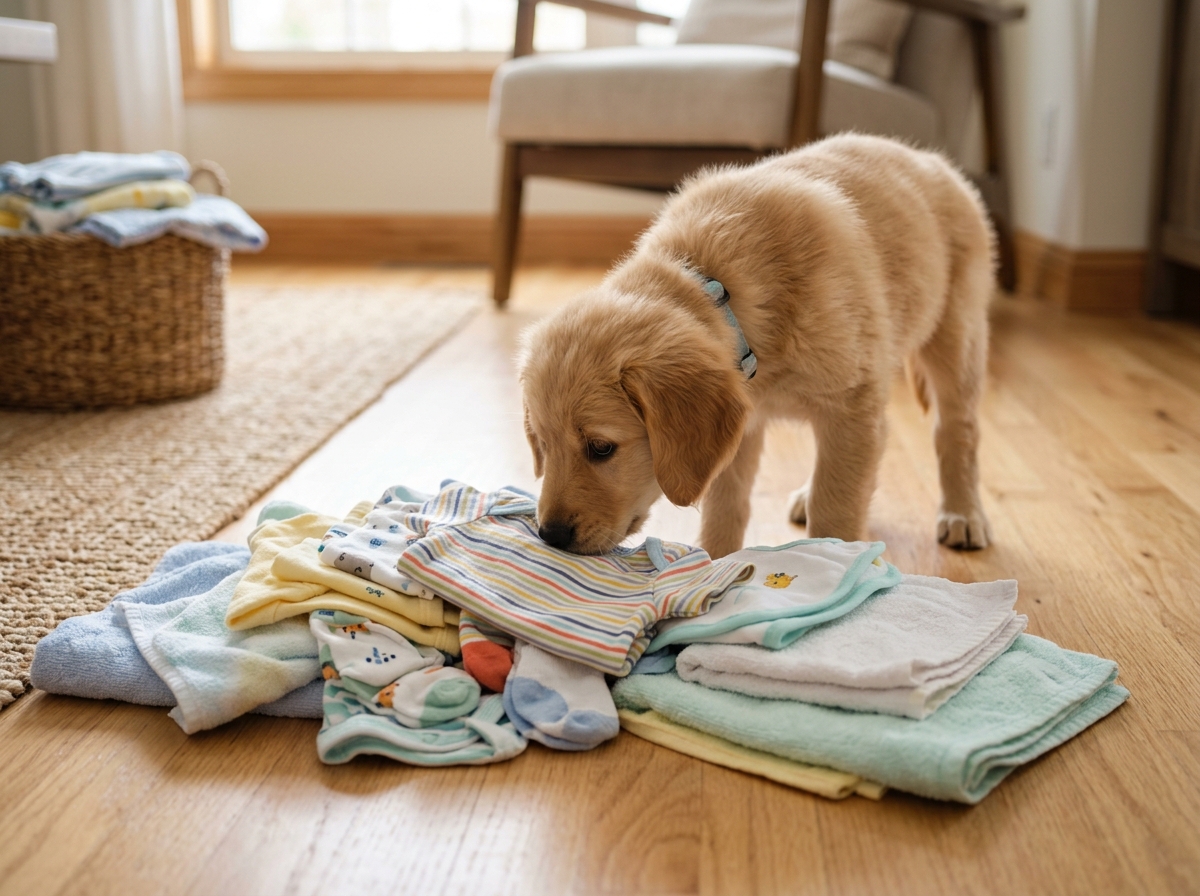
How introduce puppy to baby scents and sounds early
A puppy’s world is defined by what they hear and smell. To a small dog, a baby’s high-pitched wail can sound like a wounded animal, which might trigger predatory instincts or intense fear.
We suggest playing recordings of baby cries at a very low volume while giving your puppy high-value treats. Gradually increase the volume over several weeks. This creates a positive association: “Baby noise = yummy chicken.” For more on building these positive links, check out our guide on socializing-your-small-dog-techniques-and-tips-2.
Scents are just as vital. Start wearing baby lotion or using baby powder so the puppy associates these new smells with their favorite person (you). You can also rub these scents on your hands before a petting session. This desensitization helps the puppy stay calm when the “real deal” finally arrives.
Desensitizing small dogs to baby gear
Baby gear is weird. Strollers are giant moving contraptions, and high chairs are tall towers that drop food. To a small breed, these items can be intimidating.
Set up the crib, swing, and stroller weeks in advance. Let your puppy sniff them (while they are stationary) and reward them for calm behavior. A great pro-tip is to practice walking your puppy while pushing an empty stroller. This teaches them to walk politely alongside the wheels before you have a baby on board.
If your puppy struggles with staying calm around new household items, you might find our successful-housebreaking-strategies-for-petite-puppies helpful for reinforcing general household boundaries and structure.
How Introduce Puppy to Baby: A Step-by-Step Guide
The day has arrived! When you first come home from the hospital, your puppy will likely be vibrating with excitement. They haven’t seen you in days!
The safest way to handle the first meeting is to have the mother (or the primary caregiver) enter the house alone first. Greet the puppy calmly, let them get their “wiggles” out, and only then bring the baby inside.
According to the AKC, the first interaction should be quiet and controlled. Have one adult hold the baby while another handles the puppy on a loose leash. Never force an interaction. If the puppy wants to sniff from three feet away, let them. If they seem calm, you can allow them to sniff the baby’s feet or a diaper. Keep these sessions very short—just a few minutes at a time. During these early days, ensure your puppy’s nutritional needs are met so they aren’t “hangry” or irritable; see our feeding-tips-for-small-breed-puppies for advice on maintaining a stable routine.
Managing the first interaction safely
Safety is a non-negotiable “Two-Adult Rule.” One person is 100% focused on the baby; the other is 100% focused on the puppy.
- Leash Control: Even if your dog is tiny, keep them on a leash for the first few days of indoor interactions. This prevents sudden lunges or “zoomies” near the infant.
- Neutral Territory: Some experts suggest the very first greeting happen outside or in a neutral room where the puppy doesn’t feel the need to guard a favorite bed or toy.
- Avoid Face-to-Face: Never put the baby on the floor with the puppy or allow the puppy to lick the baby’s face. As noted by How2Mom, keeping the baby elevated (in your arms or a crib) creates a safe physical gap while the puppy adjusts to the new “human scent.”
Handling puppy excitement or anxiety
Small dogs often show stress in subtle ways. Watch for “whale eye” (seeing the whites of their eyes), lip licking, or a tucked tail. If your puppy is excessively licking their paws or pacing, they are anxious.
If the puppy becomes over-excited, do not scold them. Scolding creates a negative association with the baby. Instead, calmly redirect them to a “place” command or give them a stuffed Kong in another room. If excitement leads to “accidents” in the house—a common stress response in small breeds—refer to our guide on mastering-potty-training-a-comprehensive-guide-for-small-dogs to get back on track.
Maintaining Safety and Routine as Your Baby Grows
As the weeks turn into months, the risks change. A newborn is stationary, but a six-month-old is a moving target. This is often when “predatory drift” can occur—where a dog’s play drive accidentally switches into hunting drive due to the baby’s erratic movements or high-pitched squeals.
Continuing a strict routine is vital. Small dogs can be sensitive to the chaos of a growing family. Interestingly, while it takes work, the effort pays off: a Swedish study found that dog exposure in the first year of life is linked to a 13% lower risk of asthma.
To manage this stage, the puppy needs a place where the baby cannot go. This is where the-essentials-of-crate-training-for-smaller-breeds becomes a lifesaver. A crate is not a punishment; it is a sanctuary.
How introduce puppy to baby movements during the crawling stage
Crawling is a major trigger for puppies. To a dog, a crawling human looks like a large, strange animal. It can be intimidating or, for some breeds, it can trigger a “chase” instinct.
- Teach the “Go Away” Cue: The ASPCA emphasizes teaching your dog to move away voluntarily when they feel crowded. Toss a treat away from the baby and say “Go away.” This gives the dog an out.
- Parallel Coexistence: Don’t force them to play. Let them exist in the same room with a barrier (like a baby gate) between them.
- Supervise Transitions: If you see your puppy staring at the crawling baby, it’s time for a break. For more tips on managing puppy behavior during these high-energy milestones, see mastering-potty-training-a-comprehensive-guide-for-small-dogs-2.
Creating a safe zone for your small dog
A “Safe Zone” is a physical space where the puppy is 100% off-limits to the baby. As the baby becomes a toddler, they will naturally want to pull ears or tails. According to BabyCenter, toddlers have zero impulse control.
Your safe zone might be a crate, an exercise pen (X-pen), or a gated laundry room. If the puppy goes there, the baby is not allowed to follow. This prevents the puppy from feeling cornered, which is the number one cause of bites in small dogs.
Managing Small Dog Behavior and Aggression
At Portal Tambas, we specialize in small dog aggression. It’s a myth that small dogs are “just feisty.” Often, their aggression is rooted in fear or resource guarding.
Resource guarding happens when a puppy thinks the baby might take their food, toys, or even “their” human. If you notice your puppy growling when the baby nears their food bowl, you must address this immediately. Check our resources on addressing-small-dog-behavior-issues for specialized techniques.
Never punish a growl. A growl is a warning. If you “train away” the growl, the dog may go straight to a bite next time they are uncomfortable. Instead, change the dog’s emotional state. If the baby is nearby, give the dog a treat.
| Behavior | Puppy Curiosity | Predatory/Aggressive Warning |
|---|---|---|
| Body Language | Wiggly, relaxed, tail wagging in circles | Stiff, frozen, tail held high/vibrating or tucked |
| Eyes | Soft, blinking | Hard stare, “whale eye” (whites showing) |
| Sounds | Playful yips or silence | Low guttural growl, lip curling |
| Action | Sniffing and moving away | Intense stalking or lunging |
If you see signs of predatory behavior—like the dog “hunting” the baby during floor time—separate them immediately and consult a professional. As Preventive Vet points out, children should never be left unsupervised with any dog, regardless of size or history.
Frequently Asked Questions about Puppy and Baby Introductions
When should I start preparing my puppy for the baby?
As soon as you know you’re expecting! Ideally, start 4-6 months before the due date. This gives you plenty of time to master basic commands and desensitize the puppy to new gear and sounds without the stress of a newborn in the house.
Is it safe to let my puppy lick the baby?
Generally, we advise against face-licking. While most “dog germs” are species-specific, puppies often explore the world (and their own backsides) with their mouths. For a newborn with a developing immune system, it’s best to keep licks limited to the baby’s feet, and even then, only under close supervision.
What should I do if my puppy growls at the baby?
Don’t panic, and don’t punish. Calmly remove the puppy from the situation. A growl means the puppy is uncomfortable. Look at the context—was the baby too close? Was the puppy near a toy? Once everyone is safe, work on building positive associations from a distance and consider reaching out to a behaviorist.
Conclusion
Bringing a new baby into a home with a small dog is a journey that requires patience, consistency, and a “safety-first” mindset. By knowing how introduce puppy to baby through proactive desensitization and supervised interactions, you are protecting both your human child and your fur baby.
At Portal Tambas, we understand that small dogs have unique personalities and can sometimes struggle with big life changes. If your puppy is showing signs of anxiety or aggression during this transition, don’t wait for things to escalate. We specialize in small dog behavior and are here to help you navigate these challenges. For more advice on raising a happy, well-behaved small breed, explore More expert training tips for small breeds.
With the right steps today, your puppy and baby will grow up to be the very best of friends.