Nearly Half of All Dogs Are Overweight — Is Yours One of Them?
Diet dog food for small dogs is one of the most searched pet nutrition topics — and for good reason. Around 45% of U.S. dogs are overweight or obese, meaning tens of millions of pups are carrying extra pounds that quietly shorten their lives.
Here are the best diet dog food categories for small dogs at a glance:
| Food Type | Best For |
|---|---|
| Weight management dry kibble | Overweight or low-activity small dogs |
| High-protein, low-fat formulas | Muscle maintenance during weight loss |
| Sensitive stomach formulas | Small dogs with digestive issues |
| Senior small breed formulas | Aging dogs with slower metabolisms |
| Indoor small breed formulas | Low-activity dogs prone to weight gain |
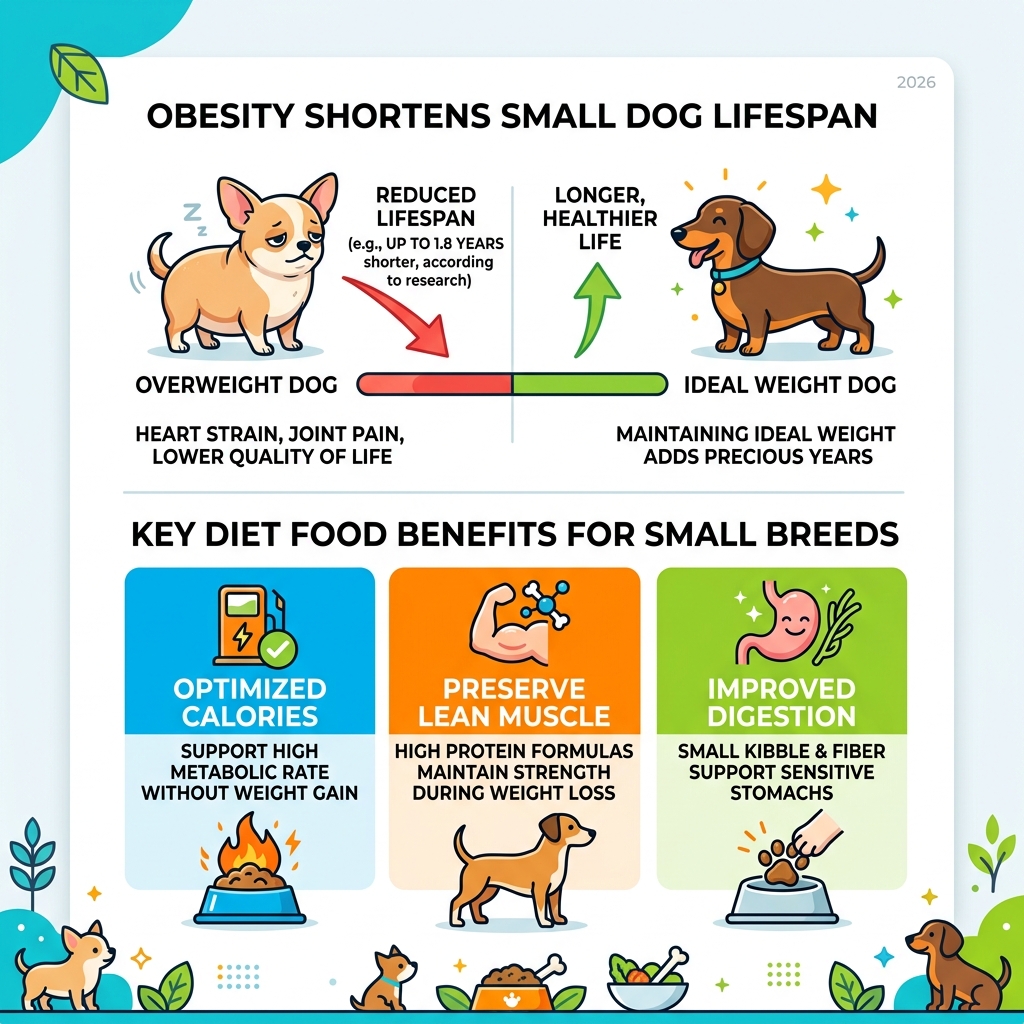
Small dogs are a special case. They burn calories faster than large breeds, live significantly longer, and carry a much higher risk of age-related health problems if they stay overweight. According to a landmark 2002 study, dogs fed to maintain their ideal body condition lived 1.8 years longer than dogs that were overfed. For a small breed that may already live 15+ years, that gap really matters.
The good news? The right food makes a measurable difference. But with hundreds of options on shelves, knowing what to look for — and what to avoid — is half the battle.
This guide breaks it all down so you can make a confident, informed choice for your little pup.
Why Small Breeds Need Specialized Diet Dog Food for Small Dogs
When we look at a Great Dane and a Miniature Dachshund, the differences are obvious. However, the most significant differences are happening on the inside. Small breed dogs have physiological requirements that are vastly different from their larger cousins. Because of their higher surface-area-to-body-mass ratio, they lose heat faster and have a much higher metabolic rate. This means they actually need more calories per pound of body weight than a large dog does.
However, this creates a “Goldilocks” dilemma. While they need energy-dense food, their stomachs are tiny. If we feed them standard dog food, they might get full before they meet their nutritional needs, or conversely, if the food is too calorie-heavy without the right balance, they pack on the pounds instantly. A single extra pound on a 10-pound Chihuahua is the equivalent of a human gaining 15 to 20 pounds!
According to this Small Breed Feeding Guide, small breeds are also notoriously picky eaters. This often leads owners to offer “toppers” or human scraps, which are the primary culprits in small dog obesity. Specialized diet dog food for small dogs is designed to be highly palatable while keeping the calorie count strictly controlled.
Furthermore, because small dogs often live twice as long as large breeds, they need long-term Health Care strategies. Maintaining a lean weight is the single most effective way to prevent the joint issues, heart disease, and tracheal collapse that frequently affect smaller pups as they age.
High Metabolism and Caloric Density in Diet Dog Food for Small Dogs
It sounds like a contradiction: small dogs need more calories per pound, yet they are prone to obesity. The secret lies in the source of those calories. A high-quality diet dog food for small dogs focuses on nutrient concentration. We want every bite to count.
Small dogs burn through energy quickly, which can lead to a dangerous drop in blood sugar, known as hypoglycemia, especially in toy breeds and puppies. Frequent, small meals of a calorie-dense but low-fat formula help keep glucose levels steady. Scientific research on weight loss success shows that formulas specifically designed for “Small & Mini” breeds can help over 70% of dogs lose weight within just 10 weeks by supporting their unique cellular metabolism rather than just starving them.
The Importance of Kibble Size in Diet Dog Food for Small Dogs
Size matters—especially when it comes to the shape of the food. Small dogs have smaller mouths and weaker jaw strength than larger breeds. Large kibble isn’t just difficult to eat; it’s a genuine choking hazard.

Beyond safety, the right kibble size provides a mechanical cleaning benefit. Small dogs are genetically predisposed to dental overcrowding, which leads to rapid plaque and tartar buildup. High-quality dry diet dog food for small dogs is often shaped to scrub the teeth as the dog chews, reducing the risk of periodontal disease. When the kibble is the right size, the dog is more likely to crunch it properly rather than swallowing it whole, which also aids in better digestion.
Key Nutritional Requirements for Weight Management
When we are looking for a weight-loss formula, we aren’t just looking for “light” food. We are looking for a complex balance of specific nutrients. At Portal Tambas, we often see that a dog’s behavior can be influenced by how they feel physically; a dog that is constantly hungry or bloated is more likely to be irritable.
Key ingredients to look for include:
- High-Quality Protein: Essential for maintaining lean muscle mass while the body burns fat.
- L-Carnitine: An amino acid derivative that helps transport fatty acids into cells to be burned for energy.
- Prebiotic Fiber: Ingredients like beet pulp help the dog feel full for longer and support gut health.
- Omega Fatty Acids: These ensure that even on a “diet,” your dog’s coat remains shiny and their skin stays healthy.
Research on digestive health and stool quality indicates that 92% of small dogs show optimal stool quality when fed formulas with highly digestible proteins and balanced fibers. For more specific advice on what to put in the bowl, check out our Feeding Tips.
Ingredients to Prioritize and Avoid
Reading a label can feel like deciphering a secret code. As a rule of thumb, the first five ingredients should be recognizable foods.
What to look for:
- Named Meats: Look for “Chicken” or “Lamb Meal” rather than “Meat By-products.”
- Complex Carbs: Brown rice and barley provide steady energy without the “crash” of simple sugars.
- Natural Fats: Coconut oil or fish oil provide excellent energy sources and support brain health.
What to avoid:
- Chemical Preservatives: Avoid BHA, BHT, and Ethoxyquin.
- Artificial Dyes: Your dog doesn’t care what color the food is, and these can trigger sensitivities.
- Propylene Glycol: Used to keep “chewy” kibble moist, but it’s an additive we prefer to skip.
- Corn Syrup: An unnecessary sweetener that contributes to weight gain and tooth decay.
Top Vet-Recommended Diet Food Categories for Little Pups
Not all small dogs have the same needs. A “weenie dog” (Dachshund) prone to back issues needs a different caloric profile than a high-energy Jack Russell Terrier.
- Weight Management Formulas: These are specifically designed for dogs that are already overweight. Options like Hill’s Science Diet Options use “metabolic technology” to help jumpstart a sluggish metabolism.
- Sensitive Stomach & Skin: Many small breeds suffer from allergies. Formulas that use easy-to-digest proteins can prevent the inflammation that often leads to weight retention.
- Indoor/Low Activity Formulas: If your pup is a professional lap-warmer, they need significantly fewer calories. The Royal Canin Indoor Formula is tailored for dogs with reduced energy needs.
- Ethically Sourced Options: For owners who want transparency, Open Farm Small Breed offers high-protein recipes with traceable ingredients.
- Budget-Friendly Bites: You don’t have to break the bank for health. Purina Dog Chow Little Bites provides a balanced, small-kibble option that is widely accessible.
Managing Portions and Feeding Frequency
The biggest mistake we see is “eyeballing” the food. A few extra kibbles every day can stall weight loss entirely for a 5-pound dog.
| Dog Weight | Weight Loss Portion (Daily) | Maintenance Portion (Daily) |
|---|---|---|
| 5 lbs | 1/3 cup | 1/2 cup |
| 10 lbs | 1/2 cup | 3/4 cup |
| 15 lbs | 3/4 cup | 1 cup |
| 20 lbs | 1 cup | 1 1/4 cups |
Note: Always check the specific kcal/cup on your bag, as density varies by brand.
Small dogs should ideally eat 2 to 3 times a day to maintain steady energy. If you have a toy breed puppy, they may need up to 4 to 6 small feedings to prevent hypoglycemia. When calculating daily totals, don’t forget to subtract the calories from treats!
How to Transition and Feed Your Small Dog Safely
You’ve found the perfect diet dog food for small dogs, and you’re ready to start. Stop! If you switch foods overnight, you are likely to end up with a mess on your carpet and a dog with a very upset tummy.
Small dogs have sensitive digestive systems. We recommend a seven-day transition period:
- Days 1-2: 75% old food, 25% new food.
- Days 3-4: 50% old food, 50% new food.
- Days 5-6: 25% old food, 75% new food.
- Day 7: 100% new food.
During this time, monitor your dog’s stool. If it becomes very loose, slow down the transition. Ensure they have plenty of fresh water, as many diet foods have higher fiber content which requires extra hydration to process. For more specific brand reviews and safety tips, PetMD Vet Recommendations can provide additional peer-reviewed insights. Always consult your vet before starting a significant weight loss journey to rule out underlying issues like thyroid problems.
Frequently Asked Questions about Small Breed Diets
How often should my small dog eat to maintain a healthy weight?
Most adult small dogs do best with two meals a day—one in the morning and one in the evening. However, very small “toy” breeds may require a third mid-day meal to prevent their blood sugar from dipping too low. Consistency is key; feeding at the same time every day helps regulate their metabolism.
What are the signs that my small dog is overweight?
The “Rib Test” is the easiest method. You should be able to feel your dog’s ribs easily without pressing hard, but they shouldn’t be poking out. From above, your dog should have a visible waistline (an hourglass shape). If they look like a “bratwurst” from above, it’s time for a diet. Also, look for signs of decreased energy or difficulty breathing after minor exercise.
Can diet help with my small dog’s sensitive stomach?
Absolutely. Many digestive issues in small dogs are caused by “filler” ingredients or hard-to-digest proteins. Switching to a high-quality diet dog food for small dogs that features prebiotics, beet pulp, and highly digestible proteins (L.I.P.) can significantly improve stool quality and reduce gas and discomfort.
Conclusion
Helping your small dog reach their ideal weight is one of the greatest gifts you can give them. It isn’t just about aesthetics; it’s about adding years to their life and life to their years. A lean dog is a more mobile, energetic, and happy companion.
At Portal Tambas, we know that a healthy body leads to a healthy mind. By choosing the right diet dog food for small dogs, you are supporting their physical health, which in turn makes behavioral management and training much more effective. For more specialized advice on keeping your little pup happy and well-behaved, explore our Expert feeding tips for small dogs.
Every journey starts with a single kibble—just make sure it’s the right one!